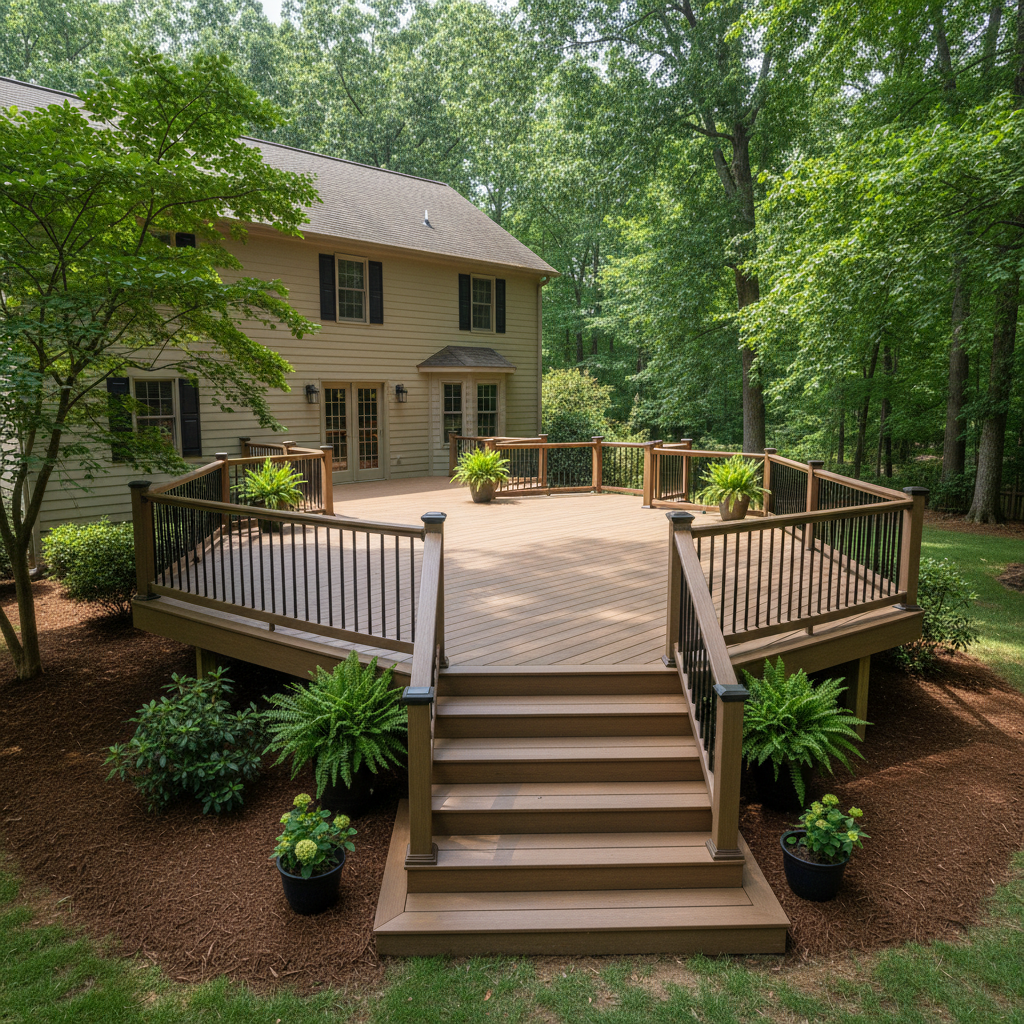
You've been dreaming of a new deck, haven't you? And composite seems like the perfect fit – low maintenance, looks fantastic, lasts forever, right? Mostly, yeah. But I've noticed folks here in Knoxville sometimes stumble when they're planning or hiring for a composite deck project. It usually ends up costing them more than just money. Let's dig into what you should watch out for.
Mistake #1: Not Really Getting the 'Low Maintenance' Part
Everyone hears "low maintenance" and immediately thinks "no maintenance." That's just not true. Look, composite decks are great, don't get me wrong. You won't be staining or sealing them every couple of years like you would with wood. But you still have to clean them. Pollen, dirt, leaves, mildew – especially with our humid Knoxville summers and all the trees in places like Sequoyah Hills – it all builds up. If you just let it sit, it can stain, and mildew can become a real headache to get rid of. I tell all my Alpha Decking clients this: a good wash down with soap and water, maybe a soft brush, a couple of times a year, will keep your composite deck looking brand new. Skip that, and you'll be facing a much bigger cleaning job later, maybe even needing a professional.
Mistake #2: Only Looking at the Decking Material Price
This is a big one. Homeowners will hunt for the cheapest composite boards they can find, thinking they're saving a bundle. What they often forget, though, is that the decking material itself is only part of the project's total cost. A huge chunk of your budget actually goes to the substructure – that's the framing underneath. It's usually pressure-treated lumber, and its quality and how it's built are absolutely critical. You could put the fanciest composite on a crummy frame, and you'd still end up with a bouncy, uneven, or even unsafe deck in just a few years. A good contractor will build a solid, properly spaced, and correctly flashed substructure that will last just as long as your composite. Don't skimp on the foundation just to save a few bucks on the surface material; it's just not worth it.
Mistake #3: Forgetting About Proper Ventilation
Composite decking, even the best brands out there, needs air circulation. If you build a composite deck too close to the ground, or completely enclose the sides without good venting, you're just asking for trouble. Moisture gets trapped, which leads to mildew, mold, and over time, boards can even warp or cup. This is especially true here in East Tennessee, where we get plenty of rain and humidity. I've seen decks built practically on the ground with no airflow, and they simply don't hold up. Make sure your contractor plans for enough space underneath the deck and includes good skirting and ventilation options if your deck is low to the ground. It's a small detail, but it makes a massive difference in how long your deck lasts and how it looks.
Mistake #4: Not Checking Contractor References or Insurance
You'd think this would be obvious, but people still get burned. You get a quote that's way lower than everyone else's, and it's tempting to jump on it, isn't it? But before you sign anything, do your homework. Ask for references, and actually call them. Take a look at their past work. Make sure they're licensed and, this is crucial, insured. If a contractor isn't insured and someone gets hurt on your property, or they damage your house, you could be stuck with the bill. Saving a few hundred bucks just isn't worth that kind of risk. A reputable company like Alpha Decking will always be open about their credentials and happy to give you references.
Mistake #5: Overlooking the Fastening System
How your composite boards are attached really matters. Some cheaper methods involve face-screwing, which leaves screw heads visible and can sometimes cause cracking or splitting over time, especially with expansion and contraction. Hidden fastening systems, like clips that go between the boards, give you a much cleaner look and often allow the boards to move better. They might add a little to the initial cost, but the aesthetic and long-term performance are totally worth it. Talk about the fastening options with your contractor and understand the pros and cons of each. You want a deck that looks good from every angle and stays that way, right?
Building a composite deck is a big investment in your home. Taking a little extra time to understand these common pitfalls and asking the right questions can save you a lot of grief, and ensure you get a beautiful, long-lasting deck you'll enjoy for years to come.