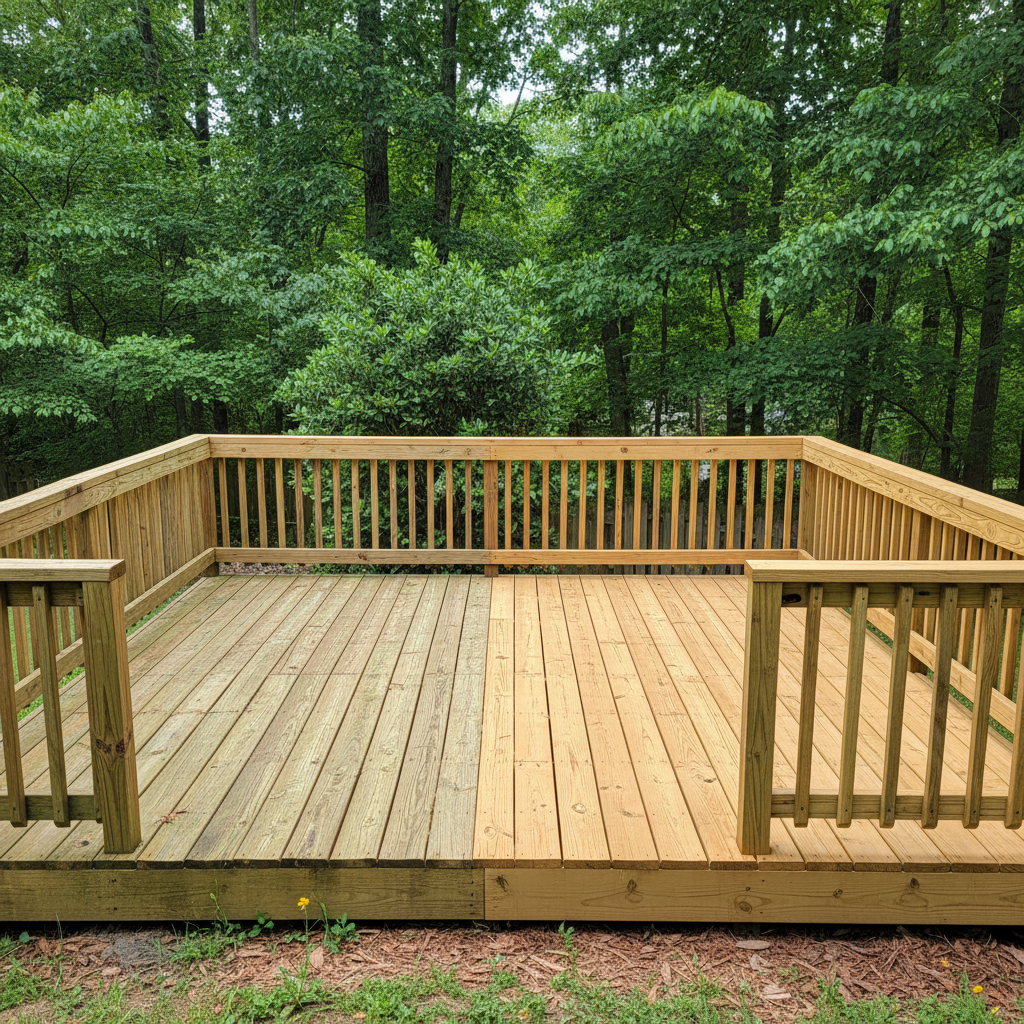
So, your deck's seen better days, huh? Maybe a few rotten boards, some wobbly railings, or just that general faded look. It happens, especially with our humid Knoxville summers and those freeze-thaw cycles we get in winter. When you're staring at that old deck, you're usually looking at two main paths: try to patch it up, or go for a full re-deck. As Alpha Decking, we see this all the time, and I want to lay out what each option really means for your wallet, your time, and how long that deck's gonna last.
Spot Repair: The Quick Fix
This is exactly what it sounds like. You've got a couple of soft spots, maybe a railing post that's seen better days, or a few splintered boards. We come in, identify the specific problems, and replace just those parts. It's like putting a bandage on a cut – it fixes the immediate issue.
The Good:
- Cost: Hands down, this is the cheaper option upfront. You're only paying for materials and labor for the specific areas that need attention. If it's just a few boards, it can save you a good chunk of change.
- Speed: A spot repair is usually much quicker to complete. We can often get in and out in a day or two, depending on the extent of the damage.
- Less Disruption: You won't have your entire backyard torn up for an extended period.
The Not-So-Good:
- Limited Lifespan: This is the big one. You're fixing symptoms, not necessarily the underlying cause. If one board rotted, others might not be far behind, especially if they're all the same age and material. You might find yourself doing another spot repair in a year or two.
- Appearance: New boards rarely match old, weathered ones perfectly. You'll often end up with a patchwork look, even after staining, which might bother some folks.
- Doesn't Address Frame Issues: If your deck's substructure (the joists, beams, and posts underneath) has issues, a spot repair won't touch that. That's critical for safety and longevity.
- Material Mismatch: Finding an exact match for older, discontinued deck board profiles or wood types can be a real headache.
Full Re-Decking: A Fresh Start
Re-decking, or resurfacing, means we keep the existing, sound deck frame (the bones of the deck) but strip off all the old deck boards, railings, and often the stairs. Then, we install brand-new decking material – whether that's fresh pressure-treated lumber, cedar, or a composite like Trex or Azek. It's like getting a brand-new deck, but without the cost and complexity of building a whole new foundation.
The Good:
- Durability and Longevity: This is where re-decking shines. You're essentially resetting the clock on your deck's surface. With new, high-quality materials, you're looking at many, many years of trouble-free enjoyment. Composite decking, for example, can last 25-30 years with minimal upkeep.
- Appearance: A re-deck gives you a completely uniform, fresh look. You can choose new colors, styles, and even switch materials to something more modern or lower maintenance. It dramatically boosts your home's curb appeal.
- Safety: We get to inspect the entire frame during a re-deck. Any issues with joists, ledger boards, or posts get addressed before the new surface goes down, ensuring your deck is structurally sound. This is huge, especially with older decks that might have hidden problems.
- Low Maintenance (with composites): If you choose composite or PVC decking, you're basically done with sanding, staining, and painting for good. Just a wash now and then.
- Increased Home Value: A beautiful, safe, and low-maintenance deck is a significant selling point for any home.
The Not-So-Good:
- Cost: It's more expensive than a spot repair, no doubt about it. You're buying a lot more material and paying for more labor.
- Time: It takes longer. Depending on the size and complexity, a re-deck project can take anywhere from a few days to a couple of weeks.
- Disruption: Your deck will be out of commission for a bit while we work.
My Recommendation for Knoxville Homeowners
Look, if your deck is relatively new (say, under 5-7 years old) and you've only got one or two isolated issues – maybe a grill fell and scorched a board, or a single railing post got hit – then a spot repair can make sense. It's a quick fix to a minor problem.
However, for most homeowners in Knoxville dealing with an older deck (10+ years) that's showing widespread wear, rot, or just looks tired, my strong recommendation is almost always a full re-deck. Here's why:
- Our Climate: The humidity and temperature swings here are tough on wood. If one board is rotting, it's a good bet others are compromised or will be soon. Patching just delays the inevitable.
- Hidden Dangers: I've seen too many decks where the surface looks okay, but the joists underneath are soft or the ledger board (the part connecting to your house) is failing. A re-deck lets us get in there and make sure everything is safe and up to code. You wouldn't believe how many decks in older neighborhoods like Fountain City or South Knoxville have hidden issues.
- Long-Term Value: While the upfront cost is higher, a re-deck gives you a practically new deck that will last for decades, especially if you go with composite. You avoid the headache and recurring costs of constant repairs, and you get a beautiful outdoor living space that genuinely adds value and enjoyment to your home.
Think of it this way: if your car has a flat tire, you replace the tire. But if your car is 15 years old and constantly breaking down, you don't just fix one thing after another; you start thinking about a new car. A re-deck is the deck equivalent of getting a reliable, beautiful new vehicle without buying the whole chassis.
Ultimately, it comes down to your budget, your timeline, and what you expect from your deck. But for lasting peace of mind, safety, and a truly refreshed outdoor space, re-decking is usually the smarter play in the long run.